
Vijayanagara · three days, two nights
Hampi 3 Day Itinerary: The Unhurried Plan for 2026
MYBy Mohammed Yaseen · Updated November 2026
This Hampi 3 day itinerary gives each part of the ruins a day of its own: the sacred centre and Matanga Hill first, every ticketed monument on one ₹40 ticket on day 2, then Anjanadri, Anegundi and the Daroji sloth bears. It runs on the overnight Hampi Express, so three full days cost you only two hotel nights.
The Hampi 3 day itinerary in brief
Quick answer
The best Hampi 3 day itinerary splits the site by area. Day 1: the Virupaksha temple, Hemakuta Hill and the sacred centre, with sunset on Matanga Hill. Day 2: the Vittala temple at its 8:30 am opening, the Zenana Enclosure, the royal centre and the Kamalapura museum on one ₹40 ASI ticket, with sunset at Malyavanta. Day 3: Anjanadri Hill at sunrise, Anegundi village, and the Daroji sloth bears late in the afternoon before the night train home.
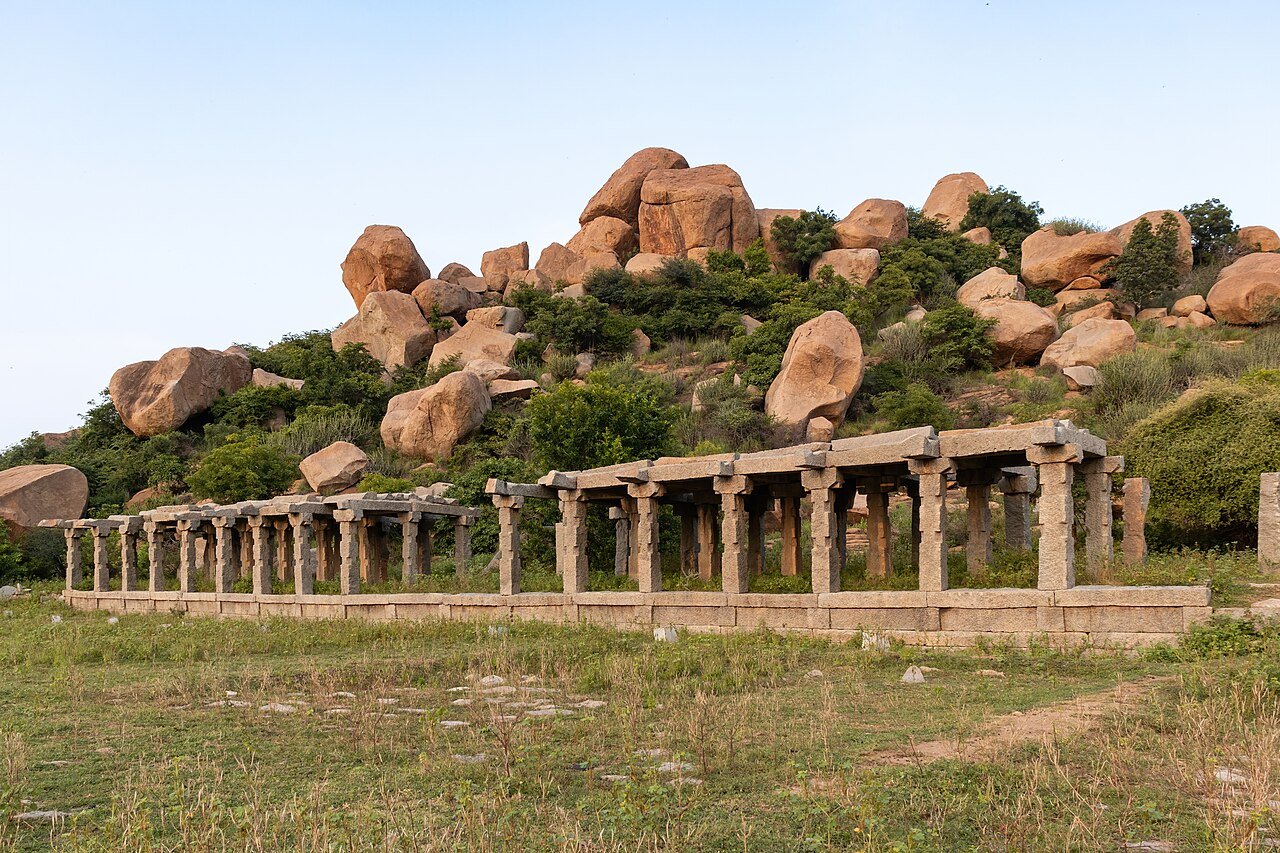
Three days is the length at which Hampi stops being a checklist. The ruins spread over about 25 sq km on both banks of the Tungabhadra, and a one-day visit has to leave out the north bank, the hills and the wildlife entirely. With three days you see all of it and still rest through the hottest hours.
How this Hampi 3 day itinerary works
- One area per day. The sacred centre, the royal centre and the north bank sit kilometres apart. Mixing them costs an hour a day in autos.
- All paid sites on one date. The ASI ticket sold at the Vittala temple also opens the Zenana Enclosure and the Kamalapura museum, but only on the day you buy it. Day 2 holds all three.
- Climbs at the cool ends of the day. Matanga, Malyavanta and Anjanadri are timed for sunset, sunset and sunrise.
- A long midday break. From about 12:30 to 3:30 pm the granite throws back heat even in December, so every day has lunch and rest built in.
Shorter on time? The Hampi 2 day itinerary drops Daroji and the riverside walk, and the Hampi 1 day itinerary fits the ticketed sites into one loop. The ruins are inscribed by UNESCO as the Group of Monuments at Hampi, the capital of the Vijayanagara empire.
3 days in Hampi at a glance
| Day | Area | Main stops | Ticket | Sunset or finish |
|---|---|---|---|---|
| Day 1 | Sacred centre and riverside | Virupaksha temple, Hemakuta Hill, the Ganesha monoliths, Krishna temple, Lakshmi Narasimha, Achyutaraya temple | None | Matanga Hill |
| Day 2 | Vittala and the royal centre | Riverside path, Vittala temple, Zenana Enclosure, Hazara Rama, Royal Enclosure, museum, Queen’s Bath | ₹40 ASI ticket | Malyavanta Raghunatha temple |
| Day 3 | North bank and Daroji | Anjanadri Hill, Pampa Sarovar, Anegundi, Sanapur Lake, Daroji Bear Sanctuary | Daroji entry | Daroji watchtower, then the night train |
Who 3 days in Hampi suits
First-time visitors who want the whole site without rushing. Photographers, who get dawn and dusk light from three different hills. Families and older travellers, who need the midday break more than another monument.
Who should pick a shorter plan
If you only want the famous monuments, two days covers them. If you are travelling between March and May and the heat worries you, cut to two days and spend the saving on an air-conditioned room.
Day 1: Sacred centre, riverside ruins and Matanga Hill
TicketnoneOn foot5–6 kmSunsetMatanga HillNightHampi Bazaar or Kamalapura
- Arrive at HosapeteThe Hampi Express reaches Hosapete Junction at about 7 am. An auto covers the 13 km to Hampi Bazaar in about 30 minutes. Drop your bags, eat, and start walking by 8:30.
- Virupaksha templeHampi’s working Shiva temple, open 6 am to 1 pm and 5 to 9 pm, free. In the inner courtyard, find the small dark chamber where a slit in the wall throws an upside-down image of the main gopuram onto the wall.
- Hemakuta Hill and the GaneshasWalk up the gentle granite slope beside the temple through clusters of early shrines and gateways, then down to the Kadalekalu and Sasivekalu Ganesha monoliths.
- Krishna temple and Lakshmi NarasimhaFollow the road south to the Krishna temple and its ruined bazaar, then take the short footpath to the 6.7 m Lakshmi Narasimha monolith and the Badavilinga beside it, which still stands in a channel of water.
- Lunch and restEat near the bazaar and stay out of the sun until about 3:30.
- Achyutaraya temple and Courtesans StreetWalk to the east end of Hampi Bazaar, past the monolithic Nandi, and drop down to the Achyutaraya temple, built in the 1530s, with its long pillared street.
- Matanga Hill for sunsetThe highest point in central Hampi. From the Achyutaraya side the climb takes 20 to 30 minutes on rock-cut steps. Stay for the sunset over the Virupaksha gopuram and come down by torchlight.
Arriving by road in the afternoon? Start Day 1 at the 4 pm stops, then see the Virupaksha temple at 6 am on Day 2, before the riverside walk. Hemakuta can wait for any spare evening.
Dress for the Virupaksha temple
Virupaksha is a living temple. Cover shoulders and knees, leave shoes at the counter and take off leather belts before the sanctum. The temple sets its own rules on photography inside, so follow the signs. Our Virupaksha temple guide has the puja times and the full layout.
The low-energy version of day 1
Swap Matanga for Hemakuta Hill at sunset. It is a five-minute walk from the bazaar, the climb is gentle, and you get the classic view of the Virupaksha gopuram against the evening light. For meals near the bazaar, see where to eat in Hampi.
Day 2: Vittala and the royal centre on one ticket
Ticket₹40 ASIStart7:15 amAfter Vittalaauto or scooterSunsetMalyavanta
- Riverside path to VittalaFrom the Kodandarama temple, follow the boulder trail along the Tungabhadra past Chakratirtha, the rock carved with 1,008 lingas and the King’s Balance. It is about 3 km; allow 75 minutes. With bad knees or small children, take an auto to the Vittala car park instead.
- Vittala templeBuy the ASI ticket at the counter (₹40 for Indians, ₹600 for foreigners, free under 15) and see the stone chariot and the musical-pillar hall before the coaches arrive. The pillars are roped off and tapping them is not allowed.
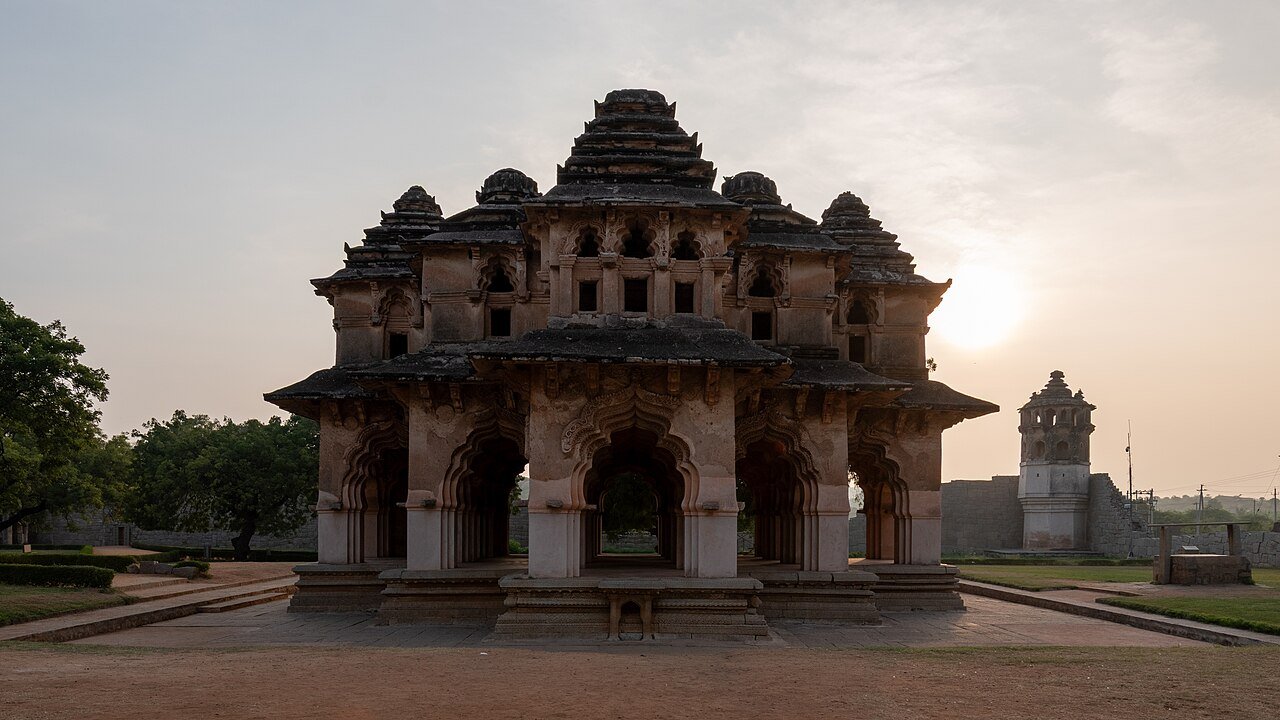
- Battery cart, then the Zenana EnclosureRide the battery cart back to the car park for ₹10, then take an auto to the Zenana Enclosure: the Lotus Mahal, the watchtowers and the eleven-domed Elephant Stables, all on the same ticket.
- Hazara Rama and the Royal EnclosureHazara Rama’s outer walls carry rows of Ramayana panels. Across the lane, the Royal Enclosure holds the Mahanavami Dibba platform and the Stepped Tank. Both are free; finish at the Underground Shiva temple.
- Lunch in KamalapuraKamalapura, 3 km south, has the nearest meals to the royal centre.
- Archaeological MuseumOpen 10 am to 5 pm, closed on Fridays, and covered by your Vittala ticket. Give it 45 minutes, then walk half a kilometre on to the quiet Pattabhirama temple.
- Queen’s BathFree, on the main road back north. Fifteen minutes is enough.
- Malyavanta Raghunatha templeA living hilltop temple you can drive right up to, built in and around giant boulders. The west-facing rocks are the day’s sunset point.
The Friday rule. The Kamalapura museum is shut on Fridays. If day 2 falls on a Friday, swap days 1 and 2 so the ticket day lands on a Thursday or Saturday. The ticket is still worth buying for Vittala and the Zenana Enclosure alone.
Why Vittala comes first
Vittala and the Zenana Enclosure are open stone courtyards with almost no shade, and both fill with tour groups by mid-morning. At 8:30 the light is low, the carvings show their depth and the chariot has no queue for photographs. The museum and Queen’s Bath take the hot part of the day because one is indoors and the other is small. Our Vittala temple guide covers the complex hall by hall.
Day 2 on a bicycle
Ride to Vittala by road via Kamalapura and the Talarigatta gate rather than on the riverside path, where you would carry the bike over boulders for half the distance. Leave Malyavanta for a scooter day; the last stretch up the hill is steep.
Day 3: Anjanadri, Anegundi and the Daroji bears
TicketDaroji entryStart5:15 amTransportone auto or taxi, fixed fareFinishHosapete station
- Road to AnjanadriCoracles do not cross before dawn, so go by road over the Anegundi bridge: about 25 km and 40 to 50 minutes. Fix the fare and waiting time the evening before.
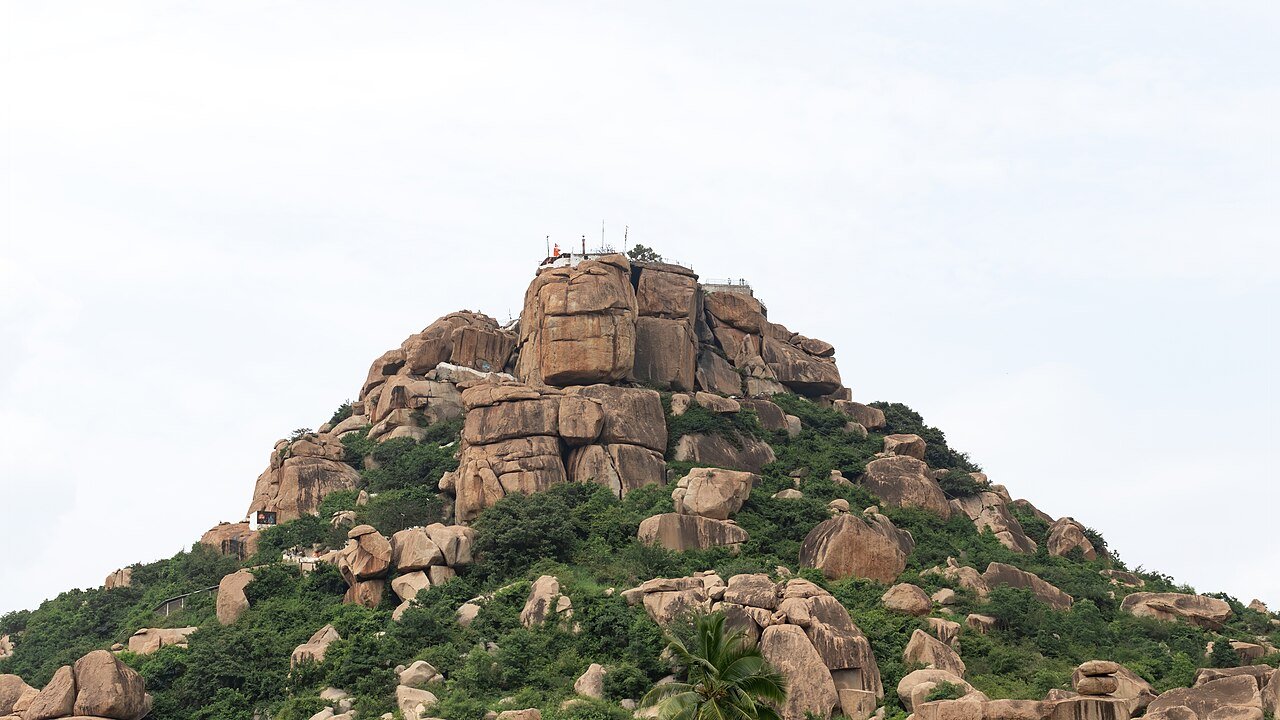
- Anjanadri HillAbout 575 whitewashed steps lead to the Hanuman temple on top, 40 to 45 minutes at a steady pace. Sunrise lights up paddy fields, boulder hills and the river. Keep food and bags closed; the monkeys are bold.
- Pampa SarovarA sacred tank at the foot of the hills, tied in local tradition to the Kishkindha chapters of the Ramayana. Tea and breakfast stalls are close by.
- Anegundi villageAnegundi is older than Hampi and was the dynasty’s first base. Walk the lanes to the Gagan Mahal, the Ranganatha temple and the Durga temple on the fort hill, and look into the village craft workshops.
- Sanapur LakeA reservoir ringed by boulders, best seen from the bund. Do not swim: crocodile warning boards stand on the shore.
- Back to Hampi, lunch, check-outCross by coracle if the boatmen are running and the river is low; otherwise return over the bridge. Keep your bags in the auto or at the hotel.
- Daroji Bear SanctuaryAbout 15 km from Kamalapura, open 2 to 6 pm. Climb the watchtower by 4 pm and wait: sloth bears usually come out onto the rocks below in the last two hours of daylight. Bring binoculars.
- Dinner in HosapeteEat near the station, then board the night train at about 9:15 pm and reach Bengaluru around dawn.
Daylight only on the north bank. In March 2025 a group of tourists stargazing by the canal near Sanapur was attacked at night, and one man drowned. Treat the lake and the canal banks as daytime stops, move as a group, and be back across the river before dark.
Daroji Bear Sanctuary timings and fees
The sanctuary opens from 2 pm to 6 pm, as listed by Incredible India. Entry is ₹50 for Indian adults, ₹25 for children and ₹300 for foreigners, and a vehicle charge of about ₹500 applies. Declared in 1994 and now 82.7 sq km of rocky scrub, it was set up for the sloth bear, and the watchtower is the only viewing point. Our Daroji Bear Sanctuary guide covers the drive and what else lives there.
Swap Daroji for the Tungabhadra Dam
Not interested in wildlife? The Tungabhadra Dam near Hosapete, completed in 1953, had all 33 of its crest gates replaced between February and June 2026, after one gate washed away in August 2024; the new gates were inaugurated on 25 June 2026. The dam is worth the trip after a strong monsoon, when water is being released. In a dry month, Daroji is the better use of the afternoon.
When the coracles run
River crossings at Hampi are seasonal and depend on the weather, and they stop whenever the Tungabhadra runs high, usually through the monsoon. When they do run, the crossing takes a few minutes and is cash only. Never board after dark. Steps, temple hours and the road route are in our Anjanadri Hill and Anegundi guide, and the wider north bank is in places to visit in Koppal.
Hampi tickets and timings for 3 days
The ASI ticket
₹40 Indians · ₹600 foreigners · free under 15
Free and living sites
No ticket needed
Daroji Bear Sanctuary
Karnataka Forest Department
Small extras
Carry change
Across three days you pay for exactly two things: the ASI ticket on day 2 and Daroji entry on day 3. Everything on day 1 is free, and so are the Royal Enclosure, Hazara Rama, Queen’s Bath, the Achyutaraya temple, Malyavanta and Anjanadri. Staff check the ASI ticket at each gate and it expires at the end of the day, so keep it until you have left the museum.
Getting around Hampi over 3 days
Auto for the day
₹1,000–1,500/day
The driver waits at each stop. The right choice for day 3 and for a hot day 2.
Best in the heatScooter
₹400–600/day
Rented in the bazaar; bring your licence and buy your own fuel. Ideal for the day 2 loop.
Best valueBicycle
₹100–150/day
Easy on day 1’s flat roads, hard work on the Malyavanta climb and the Daroji run.
Day 1 onlyThe best mix for three days
Walk on day 1, when every stop is within about 2 km of the bazaar. Use a scooter or an auto on day 2, because Vittala, the royal centre, Kamalapura and Malyavanta form a loop of roughly 15 km. Hire one auto or taxi with a fixed fare for day 3: Anjanadri, Anegundi, the return, Daroji and the station drop add up to about 100 km by our estimate, and a driver who waits saves the whole day.
Vehicles near the monuments
Private vehicles stop at the Vittala car park, and the last stretch is on foot or by battery cart. Everywhere else in this plan you can park close to the gate.
Getting to Hampi and where to stay
The Hampi Express from Bengaluru
The Hampi Express (16592) leaves KSR Bengaluru at about 9:50 pm and Yesvantpur at 10:05 pm, and reaches Hosapete Junction at about 7 am. Fares are about ₹250 in sleeper and ₹680 in 3AC. The return train leaves Hosapete at about 9:15 pm and gets in before 6 am, which is why this plan ends at the station after dinner. Book early for Friday and Sunday nights. The bus, the drive of about 340 km and flights via Hubballi are compared in how to reach Hampi from Bangalore.
Where to stay for 3 days in Hampi
Sleep on the south bank. Hampi Bazaar’s guesthouses put you within a walk of the day 1 sights and Matanga Hill. Kamalapura suits the royal centre, the museum and the Daroji run, and has the larger hotels. Hosapete is a 30-minute auto ride away but has the widest choice and the station. All three are compared in where to stay in Hampi.
Hampi 3 day trip cost
These are our estimates per person for two travellers sharing a room, built from the train fares and entry fees above. Room and food lines are typical ranges, not quotes.
| Item, per person | Budget | Comfortable |
|---|---|---|
| Train, Bengaluru return | ₹500 (sleeper) | ₹1,360 (3AC) |
| Two nights’ stay | ₹600–1,000 | ₹2,500–4,000 |
| Food for 3 days | ₹1,200–1,800 | ₹2,400–3,600 |
| Local transport | ₹1,500–2,200 | ₹2,000–2,800 |
| Tickets: ASI, Daroji, vehicle share | ₹340 | ₹340 |
| Total | ₹4,140–5,840 | ₹8,600–12,100 |
Travelling solo pushes the room and auto lines up by roughly half. Line-by-line prices, including flights and private cars, are in the Hampi trip cost guide.
Best time for a 3 day Hampi trip
Dry, clear and warm by day: the only months when a full three-day plan is comfortable. Weekends get busy.
Afternoons often pass 40°C. Keep the plan, start at sunrise every day and stretch the midday break to 4 pm.
Green and quiet, but coracles stop, parts of the riverside path flood and the Matanga rock turns slippery.
Weekdays from November to January are the sweet spot. Month-by-month detail is in best time to visit Hampi, and festival dates are in the Hampi Utsav guide.
Mistakes that cost a day in Hampi
Avoid
- Buying the ASI ticket on one day and visiting the museum on another: it expires at the end of the day.
- Planning Daroji for the morning: the gate opens at 2 pm.
- Counting on a coracle in the monsoon or after dark.
- Climbing Matanga or Anjanadri in the middle of the day.
- Putting the ticket day on a Friday.
- Swimming in Sanapur Lake or the river.
Do
- Book the Hampi Express both ways as soon as your dates are fixed.
- Carry cash: boatmen, autos and small shops rarely take cards.
- Carry 1.5 litres of water a head and a torch for the hill descents.
- Fix auto fares and waiting time before you set off.
- Dress for the Virupaksha temple on day 1.
- Leave the north bank before dark on day 3.
Hampi 3 day itinerary: frequently asked questions
Is 3 days enough for Hampi?
Yes. Three days covers the sacred centre, every ticketed monument, the north bank around Anjanadri and Anegundi, and the Daroji Bear Sanctuary, with a midday rest each day.
What is the best Hampi 3 day itinerary?
Day 1: the Virupaksha temple, Hemakuta Hill and the sacred centre, with sunset on Matanga Hill. Day 2: the Vittala temple at 8:30 am, the Zenana Enclosure, the royal centre and the Kamalapura museum on one ticket, with sunset at Malyavanta. Day 3: Anjanadri at sunrise, Anegundi, Sanapur Lake and the Daroji bears in the late afternoon.
How many nights do I need for 3 days in Hampi?
Two, if you take the overnight Hampi Express both ways: arrive at Hosapete at about 7 am on day 1 and leave at about 9:15 pm on day 3.
Does one ticket cover all the Hampi monuments?
The ₹40 ASI ticket (₹600 for foreigners, free under 15) covers the Vittala temple, the Zenana Enclosure and the Kamalapura museum on the day you buy it. Most other monuments, including the Royal Enclosure and the Virupaksha temple, are free.
What are the Vittala temple timings?
8:30 am to 5:30 pm every day. Arrive at opening, before the tour groups and the heat.
What are the Daroji Bear Sanctuary timings and fees?
It opens from 2 pm to 6 pm. Entry is ₹50 for Indian adults, ₹25 for children and ₹300 for foreigners, plus a vehicle charge of about ₹500. Be on the watchtower by 4 pm.
How much does a 3 day Hampi trip cost?
Our estimate is ₹4,140 to ₹5,840 per person on a budget and ₹8,600 to ₹12,100 in comfort, for two people sharing and travelling from Bengaluru by train.
How do I get from Hampi to Anjanadri Hill?
By road over the Anegundi bridge, about 25 km and 40 to 50 minutes from Hampi Bazaar, or by coracle in daylight when the river is low. The climb is about 575 steps.
Is the Hampi museum open every day?
No. The Archaeological Museum at Kamalapura opens 10 am to 5 pm and is closed on Fridays, so keep your ticket day off a Friday.
Can I do 3 days in Hampi without my own vehicle?
Yes. Walk on day 1, combine the riverside path with autos on day 2, and hire one auto or taxi with a fixed fare for day 3, which covers about 100 km.
Plan the rest of your trip
Hampi in 1 day
Every ticketed site in a single loop.
1-day plan →Hampi in 2 days
The ruins plus an Anjanadri sunrise.
2-day plan →Hampi trip cost
Trains, rooms, rentals and tickets, line by line.
See the budget →Where to stay
Hampi Bazaar, Kamalapura or Hosapete.
Compare areas →Daroji Bear Sanctuary
Sloth bears from the watchtower.
Sanctuary guide →Places to visit in Vijayanagara
Every sight in the Hampi district.
District guide →Going on to the Chalukya temples? Read the Badami, Aihole and Pattadakal guide, compare UNESCO World Heritage Sites in Karnataka, or fold Hampi into the Karnataka 7-day itinerary. Ticket prices and hours are set by the Archaeological Survey of India, the temple managements and the Karnataka Forest Department. Updated November 2026.